
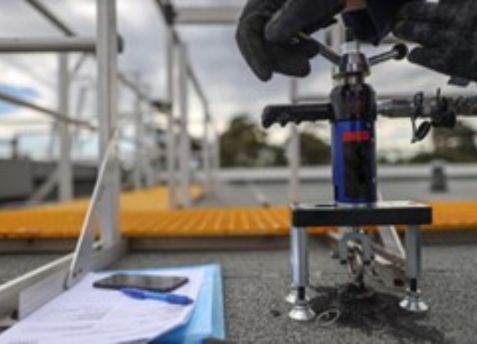
We provide an extensive range of testing and deliverables in the field of Structural Condition Assessment, tailored to meet the specific requirements of the owner and the project. Our standard condition assessment or condition survey aims to identify the root causes of issues and assess the level of damage on various structures such as buildings, bridges, tunnels, slabs, pillars, jetty structures, and coolers.
Additionally, we offer inspection services encompassing various aspects of construction and materials technology. These services include evaluating specifications, establishing quality assurance and quality control (QA/QC) schemes for material/product assessment, conducting failure investigations, and performing statistical analysis of performance tests. Moreover, we can develop test methods in cases where suitable standards are unavailable.
A structural assessment involves evaluating the overall integrity and performance of an existing structure or building. Our experienced professionals conduct various tests and inspections to analyse the overall condition of these structures
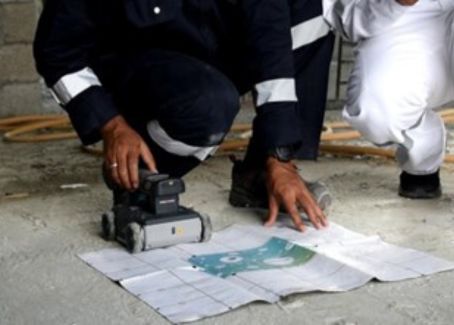
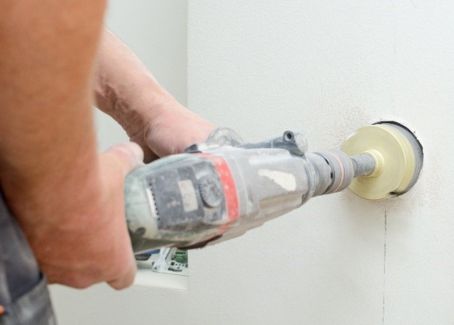
Most of Aries Energy’s assessment methods — including rebound hammer testing, GPR surveys, thermal imaging, ultrasonic pulse velocity, and half-cell potential surveys — are non-destructive and can be performed while a building remains occupied or a structure remains in service. Only core extraction and exploratory excavation are locally invasive and require the affected area to be cordoned off temporarily. The assessment scope is typically planned to minimize disruption to occupants or operations.
Rebar corrosion is assessed using half-cell potential surveys, which map the electrochemical corrosion risk across the concrete surface, combined with rebar scanning using cover meters to locate reinforcement and verify cover depth. Concrete resistivity testing and depth-of-carbonation measurement are used alongside these to determine whether conditions in the concrete are conducive to ongoing corrosion. Core extraction can follow for chemical/petrographic confirmation.
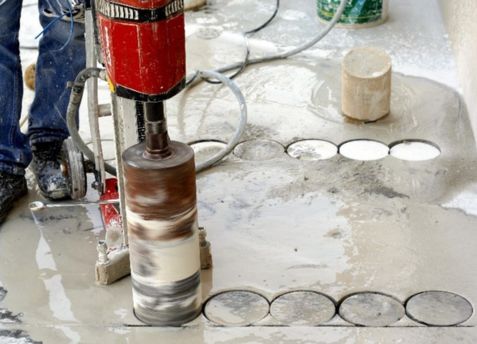
No. Core extraction is not a default step — it is used selectively when strength verification or chemical/petrographic analysis of the concrete is needed beyond what non-destructive methods (rebound hammer, ultrasonic pulse velocity, GPR) can confirm. Because it is locally destructive, it is typically limited to representative sample locations identified from the non-destructive survey results.
No, the scope extends beyond buildings to bridges, tunnels, slabs, pillars, jetty structures, and coolers. The same core methodology (visual survey plus the relevant combination of NDT and, where needed, destructive testing) is applied across these structure types, with method selection adjusted to the structure’s material and exposure conditions, such as marine jetty structures requiring corrosion-focused testing.
